
Ceiling Fan & Light Fixture Installation

Electrical Fixtures
New Fixtures Change a Room Faster Than Almost Anything.
A dated flush mount swapped for something with presence. A ceiling fan where there’s never been one. Dimmers on the lights you actually use at night. Small changes, and the room reads differently that evening.
Insured • Background-Checked Craftsmen • Two-Year Limited Workmanship Warranty
What We Install
Ceiling fans. New installations and replacements, including rooms that don’t currently have one, sloped and vaulted ceilings, and fans with remotes or wall controls.
Light fixtures. Flush mounts, semi-flush, pendants, chandeliers, vanity lights, and exterior fixtures. Including the tall entryway and stairwell ones that need proper staging to reach safely.
Switches, dimmers, and outlets. Standard replacements, dimmers on the circuits you want them, and smart switches.
Under-cabinet and accent lighting. The lighting that makes a kitchen work rather than just be lit.
Bathroom exhaust fans. Replacement of units that have gotten loud, weak, or stopped moving air.
Adding a Remote to a Fan You Already Have
Most fans can take a remote, whether or not they came with one.
Retrofit kits install inside the fan canopy and work with the existing wiring, so you get speed and light control from a handheld or a wall unit without rewiring anything. That’s often the answer in rooms where the switch is in an awkward spot, or where a single switch controls both the fan and the light and you can’t run them independently.
Some fans are better candidates than others — it depends on the canopy space and how the fan is wired internally. If you’ve got a fan you like and just want better control of it, mention it and we’ll take a look while we’re out.
About Balancing
Every ceiling fan needs balancing. It’s not a sign that something’s wrong.
Fan blades are manufactured to a tolerance, not to perfection, and the differences between them are small enough that you’d never see them sitting still. Spun at speed, a fraction of an ounce becomes visible movement. That’s why fans ship with a balancing kit in the box — the manufacturer already knows.
Balancing is a process of narrowing it down: finding the blade that’s off, adding weight, checking, adjusting. It gets a fan to smooth and quiet, which is what you actually want. What it won’t get you is dead still. A fan running at high speed on a long downrod will always have some movement in it, and any installer who promises otherwise hasn’t balanced many fans.
If yours has developed a wobble it didn’t used to have, that’s different — that’s usually a loose canopy or a blade that’s shifted, and it’s worth looking at.
Bring Us the Whole List
Fixtures are the classic example of work that’s cheaper together.
Three lights, two dimmers, and a fan in the bedroom is one visit. The same list spread over three separate calls means paying for setup and travel three times.
If you’ve been collecting fixtures in boxes in the garage waiting to deal with them, this is the visit for that.
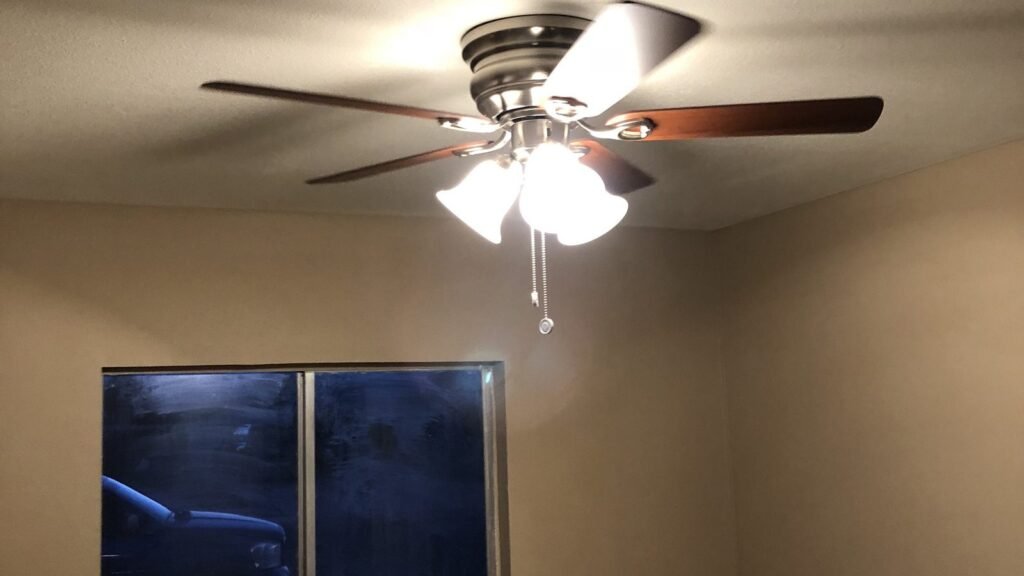
Ceiling fan installation
Part of our installation and replacement services.
Frequently Asked Questions
Proudly serving Cleveland, Ooltewah, Chattanooga, and the surrounding communities of Southeast Tennessee.
Your To-Do List Has Waited Long Enough.
From a single repair to a full refresh, we’ll walk your project, answer your questions, and put it in writing.