Cabinet Painting
Cabinet Painting
The Cheapest Way to Get a Different Kitchen.
New cabinets cost more than most kitchen remodels used to. If the boxes are sound and the layout works, paint changes the room for a fraction of that — and done properly, it doesn’t look painted.
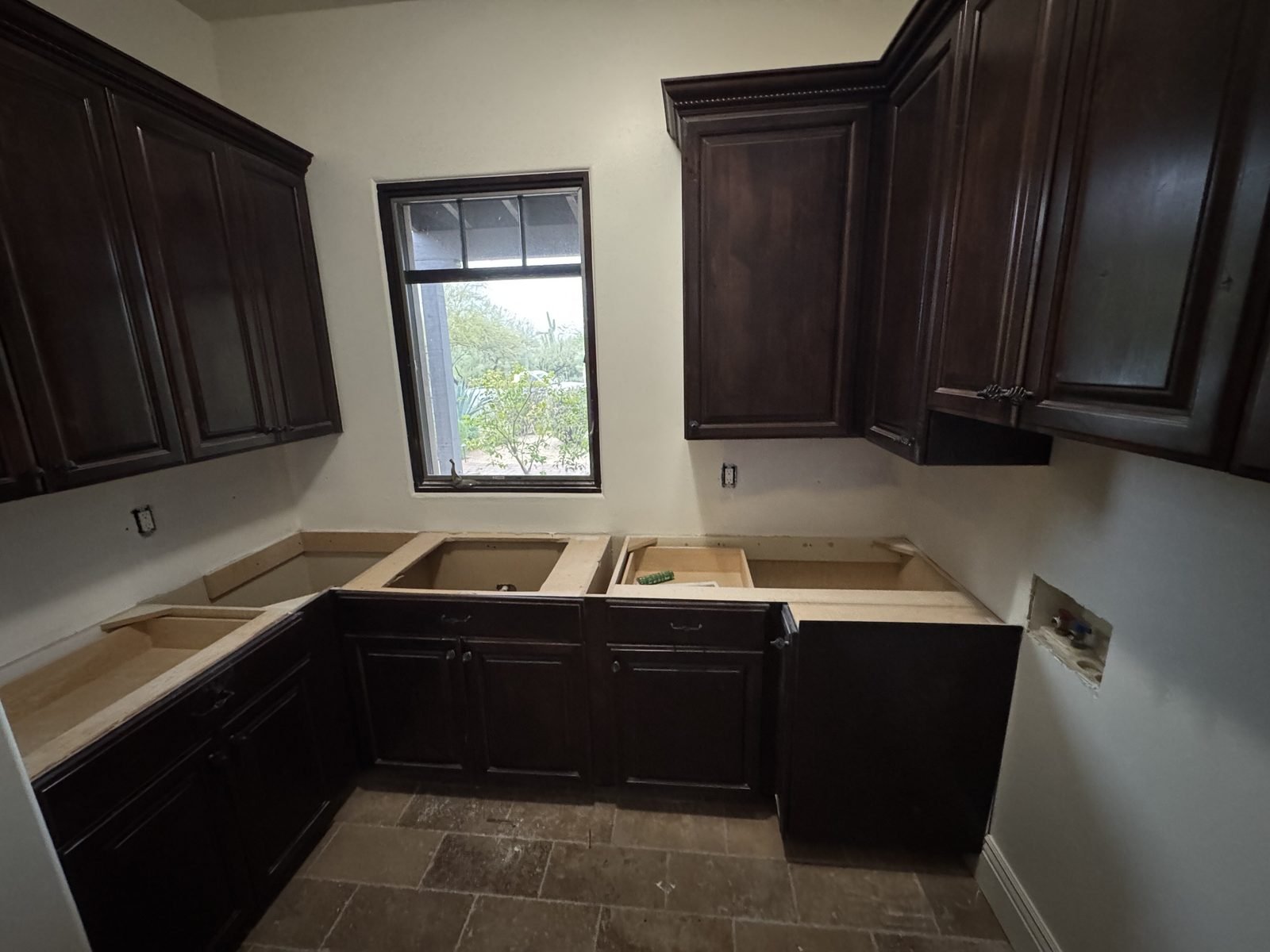
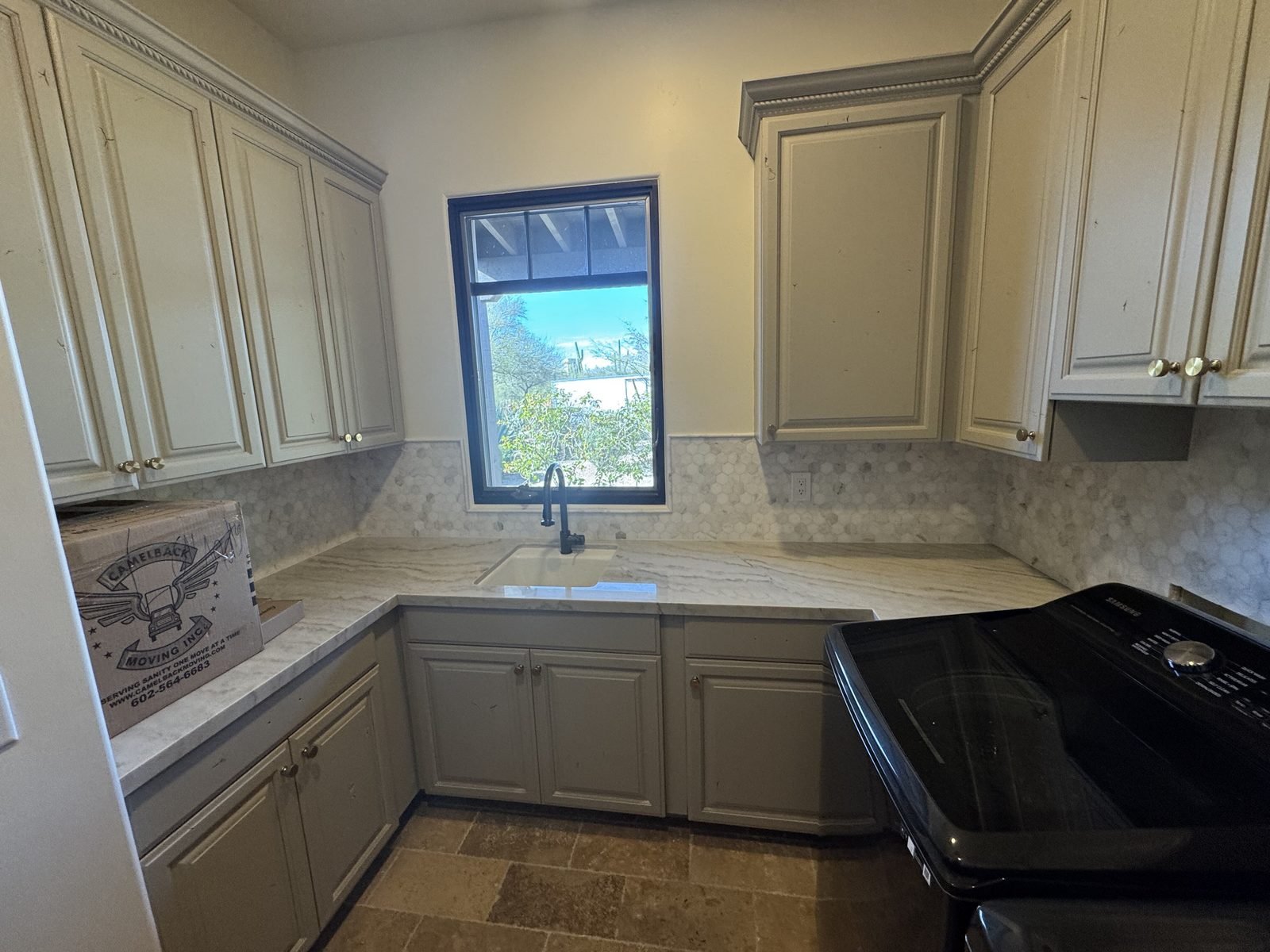
Laundry cabinets around the window: before · repainted, with a new counter and backsplash
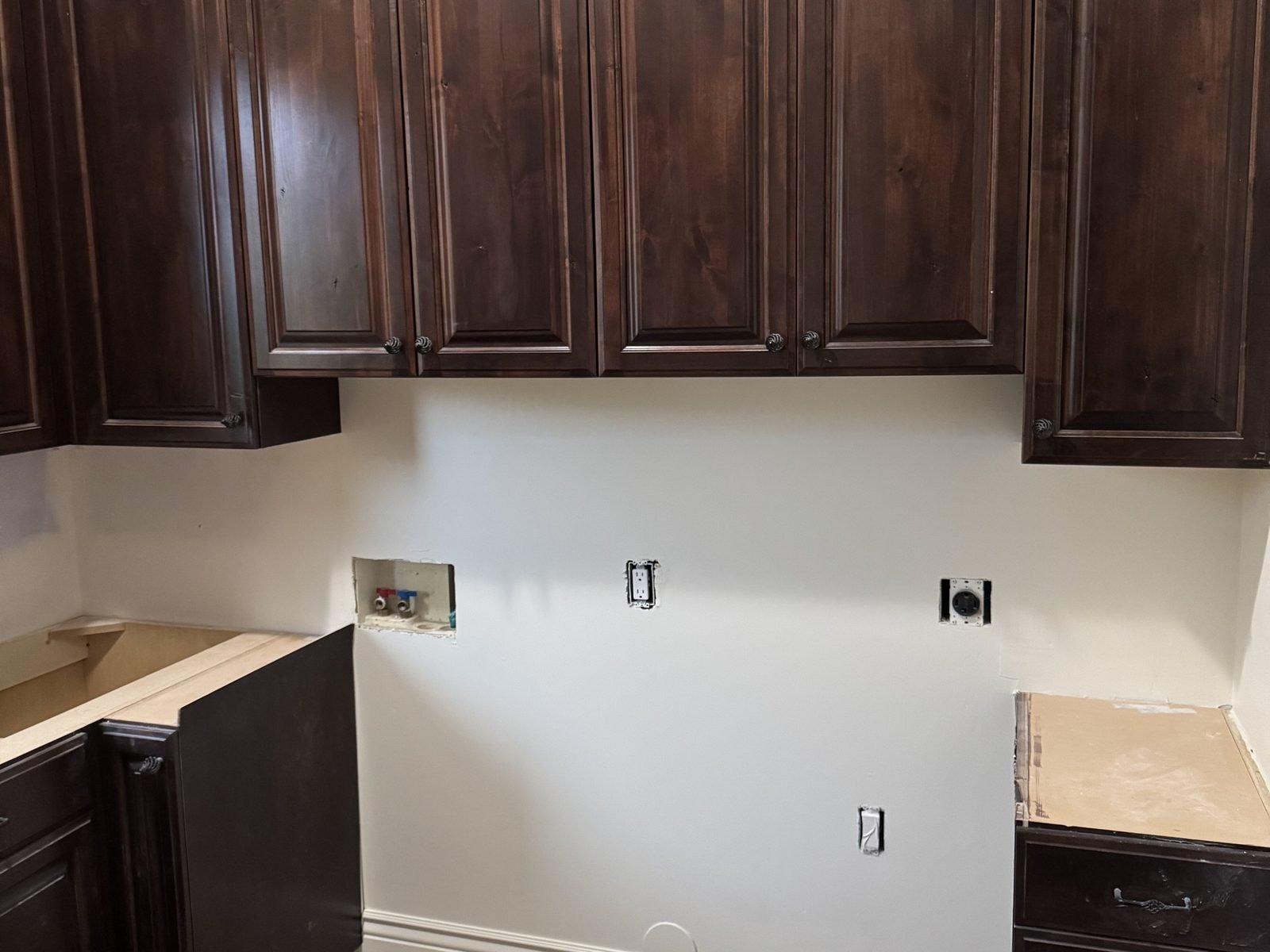
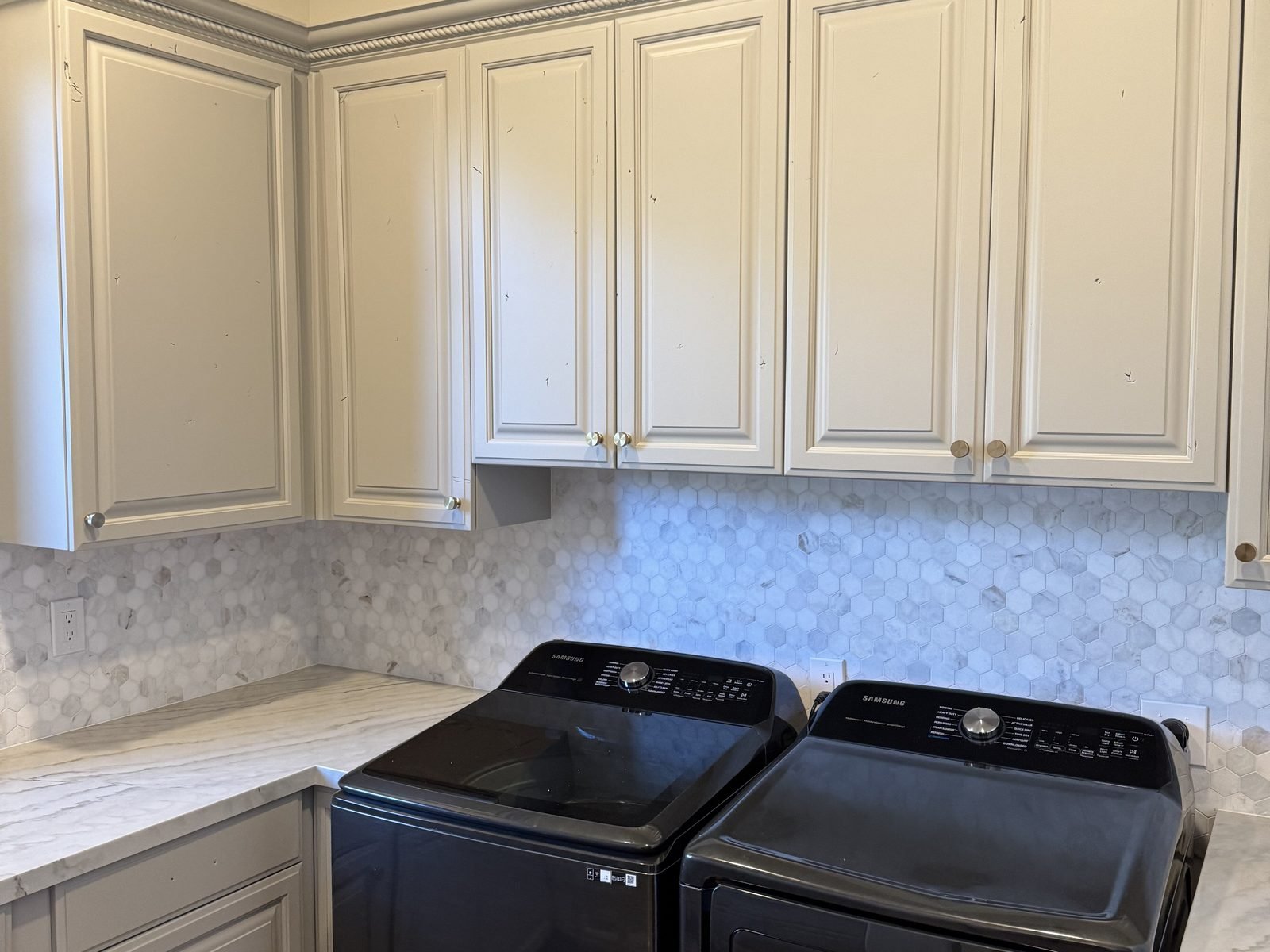
Laundry uppers: before · repainted with new hardware
Insured • Background-Checked Craftsmen • Two-Year Limited Workmanship Warranty
Why This Is the Highest-Impact Thing in a Kitchen
Cabinets are the largest continuous surface in the room. More than the floor, more than the counters, more than the walls. Change their color and the eye reads the whole space differently.
Which is why it’s also the most visible place to get it wrong. Cabinet doors get opened with wet hands, wiped with cleaner, bumped by pans, and scratched by fingernails — every day, for years. A finish that looks beautiful and can’t take that is a finish you’ll be looking at peeling in eighteen months.
Why Most Cabinet Paint Jobs Fail
Grease. Kitchen cabinets carry a film of cooking residue that isn’t visible and doesn’t wash off with soap. Paint over it and the finish never bonds properly — it looks fine at first and starts letting go at the edges.
A slick factory finish. Cabinets come coated to shed exactly what paint needs to grip. Skip the step that addresses this and the finish sits on the surface instead of holding to it.
Wall paint on woodwork. The most common shortcut and the most obvious one. Wall paint stays soft, so it marks, dents, and sticks to itself where a door meets its frame.
Brush marks and roller texture. On a wall, texture disappears. On a cabinet door at eye level, in kitchen light, it’s the first thing anyone sees.
How the Work Happens
Doors and drawer fronts come off. Often they leave — they’re prepped and sprayed in our shop or a contained environment, where the finish can be laid down without overspray in your house and can cure without dust settling into it.
The boxes and face frames are done on site.
Then everything goes back on and gets set. How much adjustment is available depends on your hinges — modern concealed hinges have three-way adjustment, and doors can be brought into alignment. Older hinges often have none, so a door that hung crooked will hang the same way unless the hinges are replaced. If your cabinets are in that category we’ll tell you before the work starts, because with the doors already off, it’s the easiest moment there will ever be to change them.
Products Are Our Call
The color is entirely yours. We’ll match anything.
The products are not negotiable, and that’s deliberate. Cabinet work uses professional woodworking coatings — not wall paint, not what’s on the shelf at a big box store. They cost more, they require the right equipment to apply, and they’re the difference between a finish that survives a kitchen and one that doesn’t.
If someone quotes you cabinet painting for noticeably less, this is usually where the difference is.
What’s Included
Kitchen cabinets, bathroom vanities, built-ins, and laundry or mudroom cabinetry. Interior and exterior surfaces of doors and boxes, depending on what makes sense for the cabinet.
New hardware installed at the same time, if you want it — pulls, knobs, and hinges. It’s the natural moment for it, since everything is already off. New pulls on a fresh finish are most of what makes a kitchen read as replaced rather than repainted, and new hinges are what let the doors hang straight afterward.
Part of our home refreshes and transformations.
Frequently Asked Questions
Proudly serving Cleveland, Ooltewah, Chattanooga, and the surrounding communities of Southeast Tennessee.
Your To-Do List Has Waited Long Enough.
From a single repair to a full refresh, we’ll walk your project, answer your questions, and put it in writing.